Asscher Cut Engagement Rings for a Vintage Feel (2026)
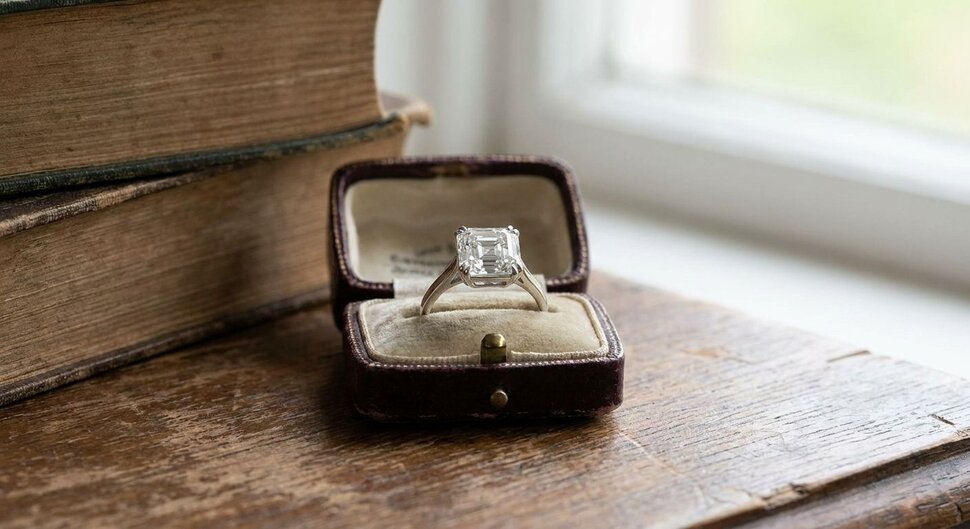
Asscher cut engagement rings bring back the geometry of the Art Deco era — squared corners, deep step facets, and a hall-of-mirrors sparkle that reads more "1920s heirloom" than modern brilliant-cut. This guide breaks down what makes an Asscher cut genuinely vintage-feeling versus just square, and which settings at Element 79 pull that look off.
TL;DR
- Asscher cut engagement rings hit peak vintage character at a 1.00-1.05 length-to-width ratio — anything wider looks modern, not Deco.
- A three-stone Asscher setting is the safe pick for heirloom feel; a bezel-set solitaire is the wildcard for daily durability.
- Step-cut facets show inclusions more than brilliant cuts, so clarity above VS2 matters more here than on a round diamond.
- Custom bridal work at Element 79's Cherry Creek boutique lets you rebuild a family stone into an Asscher-style setting without losing the vintage read.
Why this matters
The Asscher cut is a step cut, not a brilliant cut. Instead of triangular and kite-shaped facets throwing scattered light like a round or princess diamond, the Asscher's rectangular facets stack in concentric layers, producing a hall-of-mirrors effect with long, flashy light planes instead of tiny sparkles. That optical signature is exactly what reads "vintage" to most eyes — it's the same cut style seen in Art Deco pieces from the 1920s and 1930s, and it hasn't changed much since Joseph Asscher patented it in 1902.
The catch: not every Asscher-cut ring feels vintage. A thin platinum band with a plain four-prong setting reads contemporary no matter what the stone is doing. Getting the heirloom effect right in 2026 depends as much on the setting, metal, and detailing as it does on the cut itself.
Who this is for
Asscher cut engagement rings suit a buyer who wants old-world glamour without going full antique reproduction — someone drawn to vintage-inspired engagement rings for an heirloom feel but who also wants a stone with serious geometric presence. If your partner talks about Gatsby, Deco architecture, or grandmother's ring more than minimalist bands, this is the cut to bring into the conversation.
What to look for in Asscher cut engagement rings for a vintage feel
Length-to-width ratio near 1.00-1.05
A square Asscher, not a rectangular one, is what reads as period-correct. Ratios drifting past 1.10 start looking like an elongated emerald cut, which shifts the whole ring toward a modern silhouette instead of a 1920s one.
Step-cut facets with visible "windows"
The open, mirrored facets of a step cut are the entire point. If a stone is marketed as "Asscher" but has small, choppy facets instead of broad planes, it's likely a modified cut chasing more brilliance at the cost of that vintage look.
Milgrain edging and filigree detail
Milgrain — the tiny beaded metal edge along a band or bezel — was standard on Deco-era rings and instantly signals "old" even on a brand-new setting. Filigree scrollwork under the head does the same job.
Clarity grade above VS2
Because step-cut facets act like windows into the stone, inclusions are more visible here than in a round brilliant of the same grade. Buyers chasing a clean vintage look should prioritize clarity over carat size when the budget forces a tradeoff.
Warm metal tones
Yellow gold and rose gold amplify the antique effect; platinum and white gold push the ring toward contemporary. Neither is wrong, but the metal choice does more to signal "era" than most buyers expect.
Setting style: bezel, three-stone, or halo
Each setting changes both the vintage read and the day-to-day durability of the ring — covered in the picks below.
Top picks
The Three-Stone Asscher — the classic heirloom pick. A center Asscher flanked by two smaller step-cut or tapered baguette side stones is one of the most historically accurate configurations for the style, echoing the exact arrangement seen in original 1920s pieces. Three-stone settings put the emphasis on the center stone's ratio and clarity rather than surrounding sparkle, so a 1.00-1.05 ratio matters even more here. If you want a piece that reads as symbolic (past, present, future) and antique in the same breath, start with three-stone engagement rings for a meaningful symbol. Buy if vintage symbolism and a wide, low-profile silhouette are the priority.
The Art Deco Bezel Asscher — the daily-wear pick. A full or half bezel around an Asscher cut protects the squared corners, which are the most vulnerable point on any step-cut stone. Corners chip more easily than rounded girdles, so a bezel isn't just aesthetic — it's structural. Deco-era rings used bezels constantly, which means this is also the most period-accurate setting choice on this list. See the style range at Art Deco engagement rings for a vintage aesthetic. Buy for anyone with an active daily routine who still wants the Deco look.
The Solitaire Asscher — the minimalist wildcard. Strip away the milgrain and filigree and an Asscher solitaire in a simple four-prong setting reads far more contemporary than the other picks here — it's the wildcard because it borrows the historic cut without the historic setting language. It works for someone who wants the geometric sparkle of a step cut without committing to a full vintage aesthetic. Consider this only if "a little vintage" is the goal, not "a lot."
The Halo Asscher — the maximum-sparkle pick. Surrounding an Asscher with a halo of smaller round or baguette diamonds adds brilliance the step cut doesn't naturally produce, which can make the ring louder and more modern-feeling depending on the halo's shape. A square halo keeps the vintage line intact; a round halo pulls it toward a more current look. Consider if brilliance matters as much as history to your buyer.
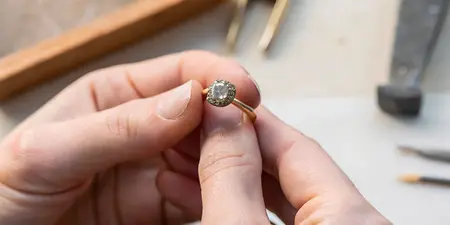
The Custom Heirloom Rebuild — the sentimental pick. If a family stone already exists — an old Asscher, emerald, or even a round diamond that could be recut — rebuilding it into a period-correct filigree setting is the most emotionally loaded option on this list, though it carries no fixed timeline since custom work depends on sourcing and design rounds. Ask about the process directly rather than guessing at turnaround. Buy if sentimental value outweighs a fast timeline.
What to avoid
- Wide rectangular "Asscher-style" cuts marketed loosely. Some sellers stretch the term to cover any squared step cut. Check the actual ratio before assuming vintage character.
- Thin, unadorned bands with a modern claw setting. Even a perfect stone looks contemporary sitting in a setting with no period detail.
- Skipping the clarity conversation to save on carat weight. A larger Asscher with visible inclusions under the step facets will look worse in person than a smaller, cleaner stone — the open facets make flaws impossible to hide.
If the designer settings and vintage detailing above feel like a lot to sort through alone, how to choose a designer engagement ring walks through the decision points before you commit to a specific piece.
Talk to a Cherry Creek jeweler
See Asscher cut settings in person and ask about custom bridal options.
Verdict comparison
Three-Stone Asscher
- Vintage read: Highest
- Best for: Symbolic, heirloom-focused buyers
- Verdict: Buy
Art Deco Bezel Asscher
- Vintage read: High
- Best for: Daily wear, active hands
- Verdict: Buy
Solitaire Asscher
- Vintage read: Low-medium
- Best for: Minimalists who want subtle history
- Verdict: Consider
Halo Asscher
- Vintage read: Medium (depends on halo shape)
- Best for: Buyers who want more brilliance
- Verdict: Consider
Custom Heirloom Rebuild
- Vintage read: Highest (uses real family stone)
- Best for: Sentimental, flexible timeline
- Verdict: Buy
FAQ
What makes an Asscher cut engagement ring look vintage?
A length-to-width ratio near 1.00-1.05, milgrain or filigree detailing, and a step-cut facet pattern with broad open windows all read as period-correct. Wider ratios and plain claw settings push the look toward contemporary instead.
Is an Asscher cut more expensive than a round diamond?
Cost depends on the individual stone's carat, clarity, and color rather than the cut shape itself, since Asscher cuts don't carry a fixed premium or discount. Ask a jeweler to price comparable clarity grades before assuming either cut costs more.
Does the Asscher cut show inclusions more than other cuts?
Yes. The broad, open step facets act like windows into the stone, making inclusions more visible than in a round brilliant of the same clarity grade. Buyers chasing a clean look should prioritize clarity above VS2.
What setting protects an Asscher cut best for daily wear?
A full or half bezel setting protects the squared corners, which chip more easily than a rounded girdle under daily impact. This is also the most historically accurate setting style for the cut.
Can an old family diamond be recut into an Asscher shape?
Older diamonds, including rounds and emerald cuts, can sometimes be recut or reset into an Asscher-style piece depending on the stone's original proportions. A custom bridal consultation is the right next step to evaluate a specific stone.
Is Asscher cut better than emerald cut for a vintage look?
Both are step cuts with similar facet patterns, but the Asscher is square while the emerald cut is rectangular, giving the Asscher a slightly more Deco-specific silhouette. Neither is objectively better; the choice comes down to preferred proportions.
What metal pairs best with an Asscher cut for an antique feel?
Yellow gold and rose gold amplify the antique effect more than platinum or white gold, which read as more contemporary. The metal choice affects the vintage impression as much as the setting style does.
One last thing
The corners are the tell. Look at any Asscher cut ring under bright light and check the four squared corners for wear or micro-chipping — that detail alone tells you whether a bezel or protective setting was used, and it's the single fastest way to spot a poorly protected antique-style stone before you buy.
Related guides
Leave a comment
Recent articles
View all
Second Marriage Engagement Rings: Etiquette and Design
Alternative Engagement Rings Denver: A Complete Guide