

What is Diamond Fluorescence? A Smart Buyer's Guide
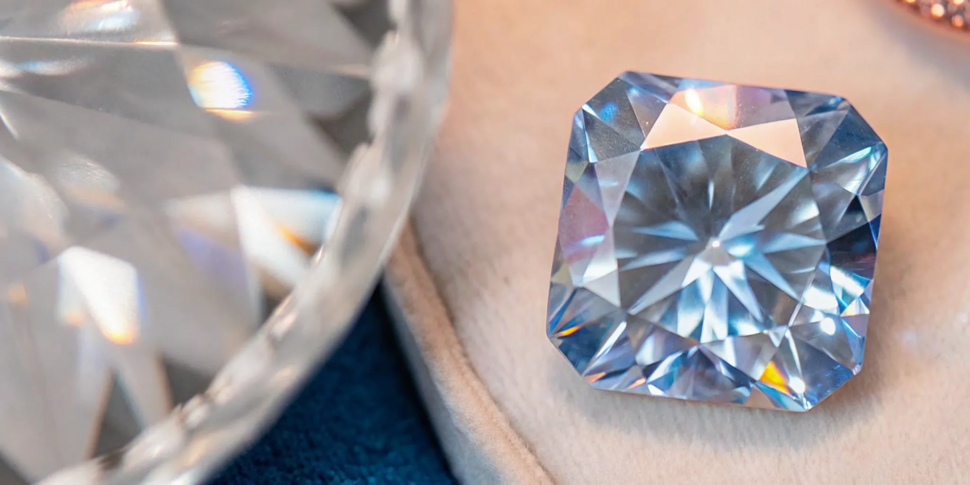
Every diamond tells a story of its incredible journey from deep within the Earth, and some have a secret to share. This secret is called fluorescence—a soft, visible glow that appears when the stone is under ultraviolet (UV) light. It’s not a coating or a flaw, but a completely natural characteristic, like a birthmark, that makes a diamond unique. But what is diamond fluorescence in practical terms, and how does it affect the stone you choose? Understanding this fascinating trait is key to appreciating the true personality of your jewelry. It’s a hidden quality that adds another layer of depth and character to these beautiful gems.
Key Takeaways
- Fluorescence is a natural trait, not a flaw: It's simply a glow some diamonds show under UV light, like sunlight. This inherent characteristic doesn't affect a diamond's durability and is invisible in most lighting.
- Use fluorescence to find incredible value: Because of market myths, diamonds with fluorescence can be priced lower. A blue glow can also make diamonds with a slight yellow tint appear whiter, giving you a better-looking stone for your budget.
- Trust your eyes over the grading report: The only way to know if you'll love a diamond is to see it in person. Always view a stone in different lighting conditions, especially daylight, to ensure its sparkle and appearance meet your standards.
What Is Diamond Fluorescence?
Diamond fluorescence is a natural glow that some diamonds show when they're under ultraviolet (UV) light, like from the sun or a black light. It’s not a coating or a treatment; it’s an inherent characteristic, a bit like a birthmark, that the diamond has had for millions of years. This glow happens because of tiny, trace amounts of elements like nitrogen that were present when the diamond was forming deep within the Earth. Not all diamonds have fluorescence—in fact, only about 25% to 35% of them do. For those that do, the glow can vary from very faint to very strong. It’s not necessarily a good or bad thing—it’s simply a unique feature that can add a little something special to our jewelry.
What Does Fluorescence Actually Look Like?
The best way to picture diamond fluorescence is to think about how a white shirt glows under a black light. It’s a similar effect. When a diamond with fluorescence is exposed to UV rays, it emits a soft, visible glow, which is usually blue. In your day-to-day life, you probably won’t notice it. Under normal indoor lighting, a diamond with fluorescence will look just like one without. You’d only see the effect in strong, direct sunlight or if you happen to be under a black light.
The Common Colors of the Glow
While fluorescence can appear in a few different colors, one is by far the most common. Over 95% of fluorescent diamonds glow blue. On very rare occasions, you might see a diamond that glows yellow, green, or even red, but blue is what you’ll almost always encounter. Because blue is a complementary color to yellow (the most common color tint in diamonds), a blue fluorescence can sometimes make a diamond with a slight yellow tint appear a bit whiter in UV light, which can be a nice bonus.
The Science Behind Why Some Diamonds Glow
The glow of fluorescence comes down to the diamond’s atomic structure. As a diamond formed under intense heat and pressure, other elements sometimes got trapped inside the carbon crystal lattice. Elements like nitrogen, boron, or aluminum can absorb energy from UV light and then release it as visible light, creating the glow. It’s a completely natural phenomenon that makes each stone unique, much like the individual vision our designers bring to their work. It’s just another fascinating quirk of natural diamonds.
What Causes a Diamond to Have Fluorescence?
A diamond’s fluorescence is one of its most interesting and misunderstood characteristics. It’s not a man-made treatment or a flaw; it’s a completely natural feature that tells a story about the diamond’s incredible journey from deep within the Earth. Think of it as a birthmark—a unique trait that sets one stone apart from another. When a diamond with fluorescence is exposed to ultraviolet (UV) light, like the kind from the sun or a blacklight, it emits a soft, visible glow. Once the UV source is removed, the glow disappears.
This phenomenon is actually quite common, with about 25% to 35% of all diamonds exhibiting some degree of fluorescence. It’s a subtle quality that often goes unnoticed in normal lighting conditions, so you might not even realize a diamond has it until it's under a specific light source. The glow is simply a fascinating reaction happening at a microscopic level, a secret language between the stone and the light. Understanding what causes this effect can help you appreciate the unique personality of each diamond you see, whether you're searching for a piece in our bridal collection or a special something for yourself. It’s just one more detail that makes the world of fine jewelry so captivating.
The Natural Elements Behind the Glow
So, what’s the secret ingredient behind this glow? It all comes down to chemistry. As a diamond forms over billions of years, tiny trace amounts of other elements can get trapped inside its carbon crystal structure. The most common elements that cause fluorescence are nitrogen, boron, and aluminum. These microscopic particles are not impurities that detract from the diamond’s beauty; they are simply part of its unique composition.
When UV light hits the diamond, it excites the electrons in these trace elements, causing them to emit energy in the form of visible light—the glow we call fluorescence. It’s a natural reaction that’s baked into the diamond’s very being. Each fluorescent diamond has a slightly different recipe of these elements, which is why the glow can vary in color and intensity.
The Earth's Role in Creating Fluorescence
The story of fluorescence begins deep in the Earth's mantle, where diamonds are born. Under immense pressure and scorching temperatures, carbon atoms crystallize to form a diamond’s rigid lattice structure. During this intense process, other elements present in the environment, like nitrogen, can be incorporated into the crystal. These are not flaws, but rather tiny witnesses to the diamond's creation.
This geological process is what makes each stone, especially those in our Vintage & Estate collection, a one-of-a-kind piece of natural art. The specific conditions of a diamond's formation determine whether it will have fluorescence and how strong that fluorescence will be. It’s a beautiful reminder that every diamond carries a unique history of its time spent miles beneath our feet.
How Is Diamond Fluorescence Graded?
When you start looking at diamonds, it can feel like there's a whole new language to learn. But here's the good news: fluorescence isn't some mysterious quality left up to interpretation. It's a characteristic that's professionally graded on a clear, easy-to-understand scale. The experts at the Gemological Institute of America (GIA)—the gold standard in diamond grading—created this system to measure the intensity of a diamond's glow under ultraviolet (UV) light. This grade is listed right on a diamond's official report, giving you a consistent point of reference. Understanding what it means is your key to looking past the myths and focusing on what really matters: finding a diamond that you connect with.
Decoding the GIA's Fluorescence Scale
The best way to think of the GIA's fluorescence scale is as a simple intensity meter. It doesn't pass judgment on whether the glow is "good" or "bad"—it just measures how strong it is. The Gemological Institute of America (GIA) grades diamond fluorescence using five straightforward levels that you'll find on any GIA-certified diamond report. This creates a universal language for everyone.
The five grades are:
- None
- Faint
- Medium
- Strong
- Very Strong
While most diamonds have no fluorescence, it's completely normal to find gorgeous stones at every level of the scale.
What Each Grade Means for You
So, how do these grades translate to what you'll actually see? For the vast majority of diamonds, you won't notice a thing. A stone with a "Faint" or "Medium" grade will almost always look identical to one with "None" in normal lighting. With "Strong" or "Very Strong" fluorescence, a very small percentage of diamonds can appear slightly hazy in direct sunlight. But here's a cool trick: a blue fluorescence can actually make a diamond with a hint of warmth (in the G-H-I color range) appear whiter and brighter. This is exactly why a diamond's report can't tell you the whole story. You have to see it for yourself, which is why we always invite you to book an appointment and see how a diamond truly performs in person.
How Does Fluorescence Affect a Diamond's Appearance and Price?
When you’re looking at a diamond’s grading report, fluorescence can feel like a confusing wild card. Does it help or hurt the diamond? The honest answer is: it depends. This single characteristic can impact a diamond's look, feel, and price in a few different ways. For some diamonds, it adds a unique quality that can even work in your favor, while for others, it might be a drawback. Understanding how it works is the key to deciding if a fluorescent diamond is the right choice for you and your budget. It’s not about a simple "good" or "bad" label, but about knowing what to look for and how it affects the specific stone you’re considering for a special piece, like an engagement ring.
The Impact on a Diamond's Color and Sparkle
The biggest question is always about appearance: will fluorescence change how my diamond looks? In some rare instances, very strong fluorescence can give a diamond a hazy or milky appearance, which can dull its sparkle. However, this effect is not very common. More often, fluorescence can actually have a positive impact. A diamond with blue fluorescence can help cancel out faint yellow tones in stones with I to M color grades, making them appear more colorless in daylight. For the vast majority of diamonds, though, the presence of fluorescence is completely unnoticeable to the naked eye under normal lighting conditions. It’s a subtle trait that often has no visual effect on the stone’s beauty.
Why Fluorescent Diamonds Can Be a Smart Buy
Here’s where things get interesting for savvy shoppers. Because of the market's mixed perceptions, diamonds with fluorescence are often priced lower than their non-fluorescent counterparts. This means you could find a stunning, high-quality diamond at a better price simply because it has a blue glow under UV light. This discount can be especially significant in colorless diamonds (D-F grades). The exception? Diamonds in the near-colorless or faint yellow range (I-M grades) with medium to strong blue fluorescence might actually sell for a slight premium. That’s because the fluorescence improves their face-up color, giving you a whiter-looking stone for your money. It’s a perfect example of how a little knowledge can help you find incredible value.
Common Myths About Fluorescence, Busted
Let’s clear up a few things. The biggest myth is that fluorescence automatically makes a diamond hazy. This isn't true. In very rare cases, strong fluorescence might highlight pre-existing microscopic inclusions that cause a hazy appearance, but the fluorescence itself isn't the culprit. Another common misconception is that fluorescence is an inherent flaw. It’s simply a natural characteristic of the diamond, not a defect. The best way to judge any diamond is to see it for yourself. We always encourage you to book an appointment to view our diamonds in different lighting environments, so you can see exactly how a stone performs in the real world, away from the grading report.
So, Should You Buy a Diamond with Fluorescence?
The short answer is: it depends. Deciding whether to buy a diamond with fluorescence isn't a simple yes or no—it's about finding the right stone for you. For some diamonds, fluorescence is a complete non-issue, having no visible effect at all. For others, it can actually be a bonus, making the stone appear whiter and brighter. In a very small number of cases, it can cause a hazy appearance.
Ultimately, fluorescence is just one of many characteristics that make up a diamond's unique identity, much like its cut or clarity. The key is to understand how it interacts with the diamond's other qualities, especially its color. When you know what to look for, you can use fluorescence to your advantage, potentially finding a stunning diamond that offers incredible value. It’s less about avoiding it and more about understanding it. When you’re ready to find your perfect piece, you can explore our collection of unique bridal jewelry.
When Fluorescence Can Be a Good Thing
Believe it or not, fluorescence can sometimes improve a diamond's appearance. This is especially true for diamonds with a slight yellow tint. If a diamond has a GIA color grade in the I to M range, a medium to strong blue fluorescence can help cancel out some of that faint yellow color. When viewed in light that contains UV rays, like natural daylight, the blue glow makes the diamond appear more colorless. Think of it as a subtle, built-in color corrector. This effect can make your diamond look a full color grade higher, giving you a whiter-looking stone without the premium price tag of a D or E color diamond.
Tips for Getting the Best Value
Here’s a little secret for savvy shoppers: diamonds with fluorescence often come with a lower price tag. Because of some outdated market perceptions, fluorescent diamonds—especially in the higher D-H color grades—can be discounted by up to 15% compared to similar stones without fluorescence. This price difference isn't because the diamond is lower quality; it's simply a market quirk. This creates a fantastic opportunity for you. You could save money on your purchase or use that budget to get a larger stone or a higher clarity grade. It’s one of the best ways to maximize your budget while still getting a beautiful, high-quality diamond from one of our incredible designers.
Potential Red Flags to Watch For
The main concern with fluorescence is that in rare cases, it can make a diamond appear milky, hazy, or oily. This effect is most often associated with diamonds that have a Very Strong fluorescence grade. The haziness can interfere with the diamond's brilliance and sparkle, making it look a bit dull. However, it’s important to know that this affects only a tiny fraction of fluorescent diamonds—the GIA estimates it’s less than 0.2% of fluorescent diamonds submitted to them. The only way to be certain is to see the diamond in person and under various lighting conditions. That’s why we always encourage you to book an appointment to view stones with us, so you can see their true beauty for yourself.
How to Shop for a Diamond with Fluorescence
Shopping for a diamond with fluorescence isn’t about avoiding it—it’s about understanding it. When you know what to look for, you can use this unique trait to your advantage and find a truly stunning stone. The key is to be an active participant in the process. Instead of just looking at a grading report, you’ll want to see the diamond for yourself, ask the right questions, and trust your own eyes. This hands-on approach ensures you find a piece that you’ll love for a lifetime, not just one that looks good on paper.
Think of it as a treasure hunt. The certificate gives you the map, but your eyes find the treasure. By focusing on a few key areas, you can confidently choose a fluorescent diamond that’s beautiful, full of life, and perfect for you. We’ll walk through exactly what to ask your jeweler, how to view the stone properly, and how to make the final call.
Questions to Ask Your Jeweler
When you’re looking at a diamond with fluorescence, your jeweler is your best resource. The most important question to ask is, "Does this diamond appear hazy or milky?" While it’s rare, very strong fluorescence can sometimes give a diamond a cloudy look, and a trained eye can spot it immediately. A trustworthy jeweler will give you a direct and honest answer. This is the perfect time to book an appointment with an expert who can walk you through the nuances of each stone and help you compare your options side-by-side. Don’t be shy about asking to see the diamond next to one without fluorescence to understand the difference.
The Importance of Seeing It in Different Lights
A diamond’s environment can completely change its appearance, especially when fluorescence is involved. That’s why it’s so important to see the stone in various lighting conditions. The UV rays in natural sunlight will make the fluorescence pop, so always ask to see the diamond near a window or even step outside. Then, look at it under the store’s indoor lighting. You want to make sure you love how it looks in every setting. This simple step is the best way to understand how your bridal jewelry will look in your day-to-day life, from an afternoon outdoors to a candlelit dinner.
Choosing the Right Diamond for You
Ultimately, the perfect diamond is the one that speaks to you. Fluorescence can even be a feature that works in your favor. For example, blue fluorescence can make diamonds with a slight yellow tint (in the I to M color grades) appear more colorless in daylight, giving you a brighter-looking stone for your money. This is especially true for many beautiful Vintage & Estate pieces. While the grading report provides essential information, it doesn’t tell the whole story. The most important factor is your personal preference. If you find a diamond that sparkles beautifully and you love its unique character, that’s the right choice, fluorescence and all.
Related Articles
Frequently Asked Questions
Is diamond fluorescence a good or bad thing? Honestly, it’s neither. Think of it as a unique characteristic, like a birthmark, rather than a flaw or a benefit. Its effect really depends on the individual diamond. For some stones, a blue fluorescence can actually make them appear whiter and brighter. In very rare cases, it can cause a hazy look. The bottom line is that fluorescence isn't inherently good or bad—it's just one of many factors that gives a diamond its specific personality.
Will I notice the glow in my diamond every day? It's highly unlikely. The glow from fluorescence only appears when the diamond is under a strong source of ultraviolet (UV) light, like direct sunlight or a black light. In your typical day-to-day life, under normal indoor lighting at home or in the office, your diamond will look exactly the same whether it has fluorescence or not. It’s a subtle feature that reveals itself only in specific situations.
Why are some fluorescent diamonds less expensive? Does it mean they're lower quality? This is a great question, and it points to a market quirk you can use to your advantage. Fluorescent diamonds are not lower quality in any way; they have the same durability and chemical makeup as any other diamond. The price difference is purely due to old industry perceptions and myths. This means you can often find a beautiful, high-quality diamond with fluorescence for a better price than a comparable stone without it.
Can fluorescence actually make a diamond look better? Yes, it absolutely can. This is one of the best-kept secrets in diamond buying. If you're looking at a diamond with a slightly warmer color grade (like a GIA grade of I, J, or K), a medium to strong blue fluorescence can work wonders. The blue glow helps to cancel out any faint yellow tones, making the diamond appear more colorless and vibrant, especially in daylight.
What's the one "red flag" I should look for with fluorescence? The main thing to watch for is a hazy, milky, or oily appearance, which can dull the diamond's sparkle. This is a rare occurrence and is typically only a potential issue in diamonds with a "Very Strong" fluorescence grade. This is precisely why it's so important to see a diamond in person and in different lighting conditions before you buy. A grading report can't tell you how a diamond truly looks and feels, but your own eyes will.
Recent articles
View all
Brooke's Holiday Favorites - 2025

Holly's Holiday Favorites - 2025