
Moissanite vs Diamond: An Honest Engagement Ring Guide
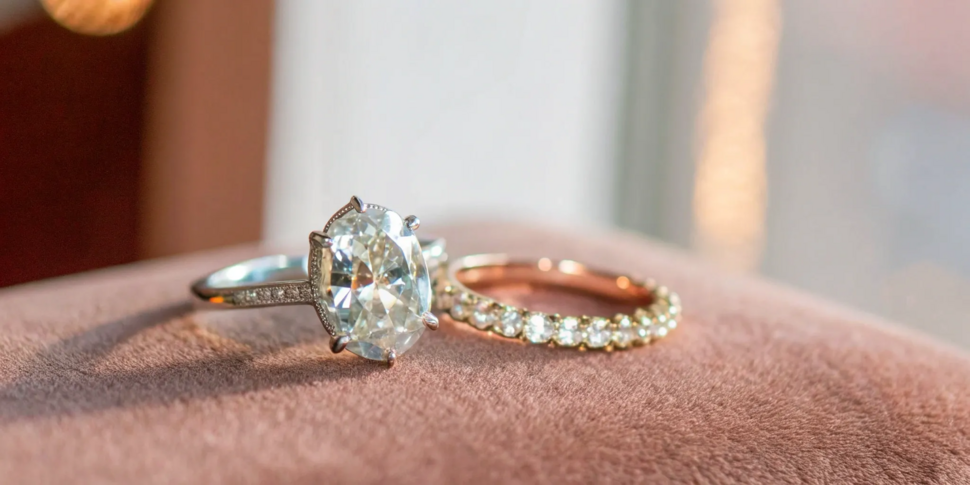
The way a stone plays with light is what gives it a distinct personality. While both moissanite and diamonds are brilliant, they sparkle in completely different ways. A diamond offers a classic, crisp white light—a timeless and elegant shimmer. Moissanite, on the other hand, has a fiery, rainbow-like flash that feels vibrant and full of energy. Neither is superior; it’s purely a matter of personal style. Do you prefer a sophisticated glow or a dazzling disco-ball effect? This guide will help you understand the visual nuances of the moissanite vs diamond engagement ring choice, so you can pick the stone with the kind of sparkle you’ll love forever.
Key Takeaways
- Prioritize what matters most to you: Moissanite’s accessible price allows you to invest in a larger stone or a more intricate designer setting. Its lab-created origin also offers a clear, ethical story, letting you choose a ring that aligns perfectly with your personal and financial values.
- Choose the sparkle that fits your style: A diamond provides a classic, crisp white brilliance, while moissanite delivers a fiery, rainbow-like flash. Neither is better—it’s about deciding which visual personality you’ll love seeing on your hand every day.
- It is a true "forever" stone: Don't mistake moissanite for a temporary substitute. As the second-hardest gemstone in the world, it is incredibly durable, scratch-resistant, and built to handle daily life, making it a confident and lasting choice for an engagement ring.
Moissanite vs. Diamond: What's the Real Difference?
When you start looking at engagement rings, you’ll quickly hear two names: diamond and moissanite. While they might look similar at a glance, they are fundamentally different gemstones. The biggest distinction comes down to their chemical makeup. A diamond is pure carbon, while moissanite is made of silicon carbide. This single difference in their composition is the source of all their other unique qualities, from how they sparkle to how they’re sourced. Understanding this is the first step to deciding which stone truly speaks to you.
Where They Come From
The story of a diamond begins deep within the Earth. Over billions of years, immense pressure and heat transform carbon into the beautiful, crystalline stones we know and love. They are a finite, natural resource brought up from the earth through mining. Moissanite, on the other hand, has an extraterrestrial origin story—it was first discovered in a meteor crater. Natural moissanite is incredibly rare, so the stones you see in jewelry today are carefully grown in a controlled lab environment. This means every moissanite is a created stone, while diamonds can be either natural or lab-grown.
How They're Made
Natural diamonds are a product of nature’s slow and steady work. In contrast, moissanite is created through a meticulous process where silicon carbide is heated until it grows into a crystal, a process that takes a couple of months. It’s important not to confuse moissanite with lab-grown diamonds. Lab-grown diamonds are also made in a lab, but they have the exact same carbon structure and physical properties as a natural diamond—they are chemically identical. Moissanite is, and always will be, a different mineral. This distinction is key when choosing the perfect stone for your engagement ring.
The Rarity Factor
Because natural diamonds are mined from the earth and their formation takes millions of years, they are inherently rare. This rarity is a major part of their value and allure. Finding a high-quality diamond is a geological lottery, making each one a unique treasure. Moissanite’s story is different. Since it’s created in a lab, it can be produced consistently and in larger quantities to meet demand. This makes it a more accessible and less rare option compared to a natural diamond. This difference in availability is a primary reason for the significant price gap between the two stones.
Comparing the Cost: Moissanite vs. Diamond
Let's talk money. It's often the elephant in the room when ring shopping, but it doesn't have to be. The cost difference between moissanite and diamond is one of the most significant factors for many couples, and understanding it can help you make a choice you feel amazing about. This isn't about which stone is "better," but about which one aligns with your budget and priorities for your dream ring.
The primary reason for the price gap comes down to how they are sourced. Natural diamonds are mined from the earth—a costly and labor-intensive process—and their supply is finite, which drives up their price. Moissanite, on the other hand, is grown in a controlled lab environment. This efficient process makes it much more accessible without compromising on beauty. For many, a more approachable price point means you can get a larger stone or invest in a more intricate, handcrafted setting from one of our talented designers. It's about allocating your budget in a way that brings your vision to life. Let's break down exactly what that looks like, both at the time of purchase and down the road.
Price Per Carat
The most straightforward difference is the price tag. Moissanite is considerably more affordable than a diamond of the same size and quality—typically costing about a tenth of the price. For example, where a beautiful 1-carat natural diamond might run into the thousands, you could get a moissanite of the same size, or even larger, for a fraction of that cost. This price difference isn't because it's a lower-quality stone; it's simply because moissanite is created in a lab. This opens up incredible possibilities for your bridal ring, allowing you to prioritize size or dedicate more of your budget to a truly unique setting.
Long-Term Value and Resale
While an engagement ring is a symbol of love, it's smart to think about its long-term value. Natural diamonds generally retain some resale value over time, whereas moissanite and other lab-grown stones typically don't. It’s important to understand this isn't a reflection of moissanite's quality or beauty—it’s purely a function of supply and rarity. However, most people buy an engagement ring for its sentimental value, not as a financial investment. If you love the idea of a piece with a rich history that holds its value, exploring our Vintage & Estate collection might be a wonderful option for you. It's another way to find a one-of-a-kind ring with a story to tell.
Durability Showdown: Moissanite vs. Diamond
Your engagement ring is more than just a beautiful accessory; it’s a part of your daily life. You’ll wear it while typing, cooking, and running errands, so it needs to be tough enough to handle whatever comes its way. When it comes to durability, both diamond and moissanite are serious contenders. They are two of the hardest gemstones on earth, making them fantastic choices for a piece of jewelry you plan to wear forever. But how do they really stack up against each other? Let's look at how each stone performs under the pressures of everyday life, so you can feel confident in your choice.
Understanding the Hardness Scale
When jewelers talk about a stone's durability, they often refer to the Mohs scale of hardness, which ranks minerals from 1 (softest) to 10 (hardest). A diamond famously scores a perfect 10, making it the hardest natural substance known. Moissanite comes in at a very close second, scoring between 9.25 and 9.5. While there's a slight difference on paper, in the real world, it’s almost negligible. Both stones are incredibly resistant to scratches and abrasions, which is exactly what you want for a bridal ring you’ll wear every day. This means you don't have to worry about everyday encounters dulling your stone's surface.
Performance for Everyday Wear
Because both moissanite and diamond are so high on the hardness scale, they are both exceptionally well-suited for daily wear. You can wear either stone with confidence, knowing it can withstand the bumps and scrapes of an active life. Moissanite is not only tough but also incredibly easy to maintain, resisting dirt and oil to keep its sparkle. Ultimately, the choice between them doesn't come down to one being significantly 'stronger' than the other for practical purposes. Both are fantastic, long-lasting options. If you're still deciding, it can be helpful to book an appointment to see and feel the stones in person and discuss which one best fits your lifestyle.
Sparkle and Shine: How Their Appearance Differs
At a glance, moissanite and diamonds look incredibly similar, which is why they’re so often compared for engagement and wedding rings. Both are clear, brilliant, and catch the eye. But when you look a little closer, you’ll notice they have distinct personalities, especially in how they play with light. Think of it less as one being better than the other and more about choosing the stone that has the kind of sparkle you can’t stop staring at.
The visual differences are subtle but important. A diamond’s beauty is rooted in its classic, crisp brilliance—a timeless look that has defined fine jewelry for centuries. Moissanite, on the other hand, offers a more fiery, colorful sparkle that many people find captivating. Neither is right or wrong; it’s purely a matter of taste. Understanding how each stone reflects light, shows color, and creates that "wow" factor will help you decide which one truly speaks to you and feels like the perfect centerpiece for your ring.
Brilliance, Fire, and That "Wow" Factor
The most noticeable difference between moissanite and diamond is their sparkle. Moissanite has a higher refractive index, which means it bends light more. The result? An intense, fiery flash that creates a rainbow-like effect. If you love a vibrant, disco-ball sparkle that throws color around the room, you’ll be drawn to moissanite.
Diamonds, in contrast, are known for their brilliance and scintillation. They reflect a crisp, white light back to your eye, creating a more subtle and balanced sparkle. While they still have fire (colored light), it’s less pronounced than moissanite’s. It’s a classic, elegant shimmer rather than an overt rainbow flash.
A Look at Color and Clarity
When it comes to color, diamonds are graded on a D-to-Z scale, where "D" is completely colorless. Most moissanite used in jewelry today is near-colorless, but it can sometimes carry faint undertones of yellow or green, especially in certain lighting. However, premium moissanite is engineered to be colorless, rivaling high-grade diamonds.
A unique characteristic of moissanite is "double refraction." If you look closely through the side of the stone, the facets can appear slightly doubled or blurry. Diamonds are singly refractive, so their facets look sharp and crisp from any angle. This is a subtle distinction that you’d typically only notice under magnification.
How They Handle Light
Ultimately, the way these two stones handle light defines their character. A diamond’s faceting is designed to maximize its return of white light, giving it that iconic, bright sparkle. It’s a sophisticated glow that feels both brilliant and understated. This is why diamonds look so stunning in everything from bright sunlight to dim, romantic lighting.
Moissanite breaks light into a fiery spectrum of rainbow colors. This is what gives it that high-energy, colorful flash. Some people absolutely adore this vibrant display, while others find it a bit too much. When choosing your stone, consider which type of light play you prefer. Do you want a classic, white brilliance or a dazzling rainbow fire? The answer will point you to the perfect stone for one of our designer rings.
The Ethical Question: Mined vs. Lab-Grown
Choosing an engagement ring is about so much more than just sparkle and style; it’s about finding a piece that represents your values. For many couples, the story behind the stone is just as important as the stone itself. This is where the conversation about mined diamonds versus lab-grown alternatives like moissanite and lab-grown diamonds really begins. The ethical considerations—from environmental impact to labor practices—are a huge part of the decision-making process.
Understanding the origins of your stone can help you feel confident and proud of the ring you’ll wear every day. Mined diamonds have a long, complex history, and the industry has made strides to improve sourcing. At the same time, lab-grown stones offer a modern alternative with a completely different and transparent backstory. There’s no single "right" answer, but exploring the differences can help you find the perfect fit for your bridal jewelry and your conscience. Let's break down what you need to know.
Comparing Environmental Impact
When we talk about environmental impact, we're looking at the footprint each type of stone leaves on the planet. Traditional diamond mining is an intensive process that can require moving enormous amounts of earth and using significant water resources. While the industry has regulations in place, the process inherently disrupts local ecosystems.
On the other hand, moissanite and lab-grown diamonds are created in controlled environments. As one person aptly put it, "Moissanite is made in a lab, which many people see as a more ethical choice than buying a mined diamond." This process requires a great deal of energy, but it completely avoids the land disruption associated with mining. For those who prioritize a smaller environmental footprint, a lab-created stone often feels like the most responsible choice.
Mining Practices vs. Lab Creation
Beyond the environmental aspect, the human side of the story is a major consideration. The history of diamond mining is fraught with concerns over labor conditions and conflict. While global initiatives like the Kimberley Process Certification Scheme were created to prevent the trade of "conflict diamonds," questions about traceability and labor practices can still linger for some buyers.
In contrast, lab creation offers a clear and simple origin story. Moissanite, a gemstone made of silicon carbide, is now produced in labs to look remarkably like a diamond, but its journey from creation to your ring is fully transparent. The same goes for lab-grown diamonds. This controlled process eliminates the social and political concerns tied to mining, offering peace of mind that your beautiful piece of jewelry is unburdened by a difficult history.
A Note on Conflict-Free Sourcing
The term "conflict-free" is one you'll hear a lot, and it’s an important one. For mined diamonds, it means the stone was sourced and sold in a way that doesn't fund civil wars or conflict. Reputable jewelers work diligently to source diamonds that meet these standards. At Element 79, we partner with designers who are deeply committed to ethical practices, ensuring every piece has a story you can be proud of.
Lab-grown stones, by their very nature, are conflict-free. Since they aren't mined, there's no risk of them being tied to regional instability or unethical labor. Their origin is documented and certain, which provides a straightforward answer to ethical questions. This inherent transparency is a key reason many people feel drawn to lab-created moissanite and diamonds for the most important jewelry of their lives.
Common Moissanite Myths, Busted
When a gemstone is as new and exciting as moissanite, a few rumors are bound to pop up. It’s easy to get tangled in misinformation when you’re trying to make such an important decision. Let’s clear the air and tackle some of the most common myths about moissanite, so you can feel confident about the stone you choose.
Myth: It's Not a "Forever" Stone
This is a big concern, and it’s completely understandable—you want a ring that lasts a lifetime. The great news is that moissanite is absolutely a "forever" stone. On the Mohs scale of hardness, it scores a 9.25, right behind a diamond’s perfect 10. This tiny difference doesn’t impact its ability to stand up to daily life. It’s incredibly durable, scratch-resistant, and tough enough for a piece you’ll wear every day. You can feel confident that a moissanite center stone is a lasting symbol for your commitment, making it a beautiful choice for any piece in our bridal collection.
Myth: It Looks "Fake"
Let’s set the record straight: moissanite is not a "fake" diamond. It’s a gemstone in its own right, with its own unique properties. People often confuse it with cubic zirconia, but they are worlds apart in quality and durability. While a diamond has a classic, white sparkle, moissanite is known for its fiery, rainbow-like brilliance—some call it the "disco ball effect." This is one of the qualities that makes moissanite so captivating. It’s not trying to be a diamond; it’s offering a different kind of beauty. The best way to judge is to see the stunning jewelry for yourself.
Myth: It Lacks Prestige
Prestige isn't just about a price tag; it's about artistry and personal meaning. The idea that moissanite is a "lesser" stone is quickly becoming outdated as more people recognize it as a legitimate and beautiful gemstone. True prestige comes from a piece that reflects your story and style, created with exceptional craftsmanship. Choosing moissanite can allow you to invest in a more intricate setting or a larger stone from one of our incredible designers, creating a truly show-stopping ring. A soulful piece of jewelry gets its value from the design and the love it represents, not just the mineral at its center.
Which Stone Gives You More for Your Budget?
Let’s be real: budget is a major factor when choosing an engagement ring. And this is where the difference between moissanite and diamond becomes crystal clear. Deciding between the two isn’t just about the stone itself; it’s about what you want your budget to do. Do you dream of a larger, more eye-catching center stone? Or is your heart set on an intricate, handcrafted setting from a specific designer?
Choosing moissanite can free up your funds, allowing you to invest in other aspects of the ring or simply save for the honeymoon. On the other hand, a diamond carries a classic prestige and inherent value that many couples prioritize. There’s no right or wrong answer here. It’s about understanding the trade-offs and deciding what will bring you the most joy when you look down at your hand. Thinking about how each stone aligns with your financial comfort and design dreams is the first step to finding the perfect ring for your story.
Getting a Bigger Look for Your Budget
If you love the look of a large, brilliant stone, moissanite offers incredible value. A moissanite stone costs significantly less than a diamond of the same size and quality—often around one-tenth of the price. This means you don’t have to compromise on carat size to stay within your budget. You can get a stunning, substantial moissanite that makes a statement for a fraction of what a comparable diamond would cost. This isn't about finding a "cheap" alternative; it's about smartly allocating your resources to achieve the exact aesthetic you're dreaming of for your bridal jewelry. It empowers you to get that "wow" factor without the hefty price tag.
Customization and Setting Possibilities
The savings on a moissanite center stone can open up a world of creative possibilities for the rest of your ring. With more room in your budget, you can explore more elaborate and unique settings. Maybe you’ve fallen in love with the work of one of our incredible designers or want to add diamond accents, intricate metalwork, or a custom-designed band. Moissanite’s versatility makes it a perfect canvas; it looks gorgeous in any setting, from a sleek, modern solitaire to a detailed vintage-inspired piece. This flexibility allows you to create a ring that is truly one-of-a-kind. If you have a specific vision in mind, we can help you book an appointment to bring it to life.
How to Choose the Right Stone for Your Ring
Choosing between moissanite and a diamond is a big decision, but it doesn’t have to be a stressful one. The perfect stone for you comes down to what you value most—whether that’s a specific look, a certain budget, or the story behind the stone. By thinking through your personal style, your budget, and your dream design, you can find a ring that feels completely, authentically you. Let’s walk through how to make a choice you’ll love for a lifetime.
Consider Your Personal Style and Lifestyle
Your engagement ring should be a reflection of you. Think about your personal style—are you drawn to classic, understated pieces or do you love a bit of drama and color? This is where the sparkle factor comes in. Moissanite is known for its fiery, rainbow-like flashes of light, which can feel bold and brilliant. A diamond, on the other hand, offers a more subtle, crisp white sparkle. Neither is better than the other; it’s purely about which kind of beauty speaks to you. Both stones are incredibly durable and suited for everyday wear, so you can focus on choosing the one that complements the rest of your jewelry and makes your heart skip a beat.
Set Your Budget and Priorities
Let’s talk numbers. One of the most significant differences between these two stones is the price. A moissanite generally costs about one-tenth the price of a diamond of the same size and quality. This isn't because it's a "cheap" alternative, but because its creation process is different and more accessible. This price difference gives you incredible flexibility. If a larger center stone is your top priority, moissanite allows you to get a bigger look without expanding your budget. Or, you could stick with a smaller moissanite and invest the savings into a more intricate setting from one of our talented designers. It’s all about deciding what matters most to you and your partner as you explore your bridal options.
Match the Stone to Your Dream Setting
The good news is that both moissanite and diamonds look stunning in any ring setting. Whether you’re dreaming of a simple solitaire, a vintage-inspired halo, or a modern bezel, you can’t go wrong. Because moissanite pairs so well with other gems, it’s a fantastic choice for unique, custom designs. You can find high-quality moissanite without any obvious flaws, so you never have to feel like you’re settling. The best way to see how different stones and settings come to life is to see them in person. We’d love to help you explore the possibilities and find the perfect combination, so feel free to book an appointment to come play with some beautiful options.
What to Prioritize When Making Your Decision
We’ve covered the specs, the sparkle, and the sourcing. Now it's time for the most important part: figuring out what truly matters to you. Choosing an engagement ring stone isn't just about comparing facts and figures; it's about finding the one that feels right for your life and your love story. Let's break down the final considerations to help you make a choice you'll adore for a lifetime.
Upkeep and Care for Each Stone
Your engagement ring will be with you through everything, so thinking about its care is smart. The good news is that both diamonds and moissanite are incredibly durable. Diamonds are famous for being the hardest natural mineral, but moissanite is a very close second, making both excellent choices for everyday wear. When it comes to cleaning, moissanite is wonderfully low-maintenance; a simple wash with mild soap and warm water keeps it sparkling. While diamonds are just as tough, they can sometimes require more frequent or professional cleaning to maintain their brilliance. Consider which level of upkeep best fits your lifestyle.
Ensuring Long-Term Happiness with Your Choice
The goal is to love your ring just as much on your 50th anniversary as you do today. Long-term happiness comes from choosing a stone for its own unique beauty, not as a stand-in for something else. While moissanite has a similar look to a diamond, it has its own distinct, fiery sparkle that many people prefer. It's important to see it as its own beautiful gemstone. The most satisfied couples are those who feel educated and confident in their decision, whether they choose a classic diamond or a brilliant moissanite. Pick the stone that makes your heart skip a beat, and you'll never feel the need to "upgrade."
Making a Decision That's Right for Your Relationship
Ultimately, this decision is a reflection of your partnership and shared values. Sit down together and talk about what’s most important. Is it maximizing the size and sparkle within your budget? Are the ethical and environmental benefits of a lab-created stone a top priority? There is no wrong answer. For some, the tradition and natural origin of a diamond are non-negotiable. For others, the value and conscious sourcing of moissanite make it the perfect choice. This is your story, and your ring should be a symbol of what you both cherish. If you'd like to explore your options in person, you can always book an appointment to see how each stone feels to you.
Related Articles
- How to Tell If a Diamond Is Real: 10 Easy Tests
- Fluorescence in Diamonds: Good or Bad? The Real Answer
- The Guide to Engagement Rings in Highlands Ranch, CO
Frequently Asked Questions
Is moissanite just a fake diamond? Not at all. Moissanite is a gemstone in its own right, with a completely different chemical makeup (silicon carbide) than a diamond (pure carbon). Think of it like comparing a sapphire to a ruby—both are beautiful and durable stones, but they aren't the same. Moissanite has its own unique beauty, particularly its fiery sparkle, and it stands on its own as a fantastic choice for fine jewelry.
Which stone is more durable for everyday wear? Both are incredibly tough and perfectly suited for a ring you'll wear every day. A diamond is famous for being the hardest substance on earth, scoring a 10 on the Mohs scale of hardness. Moissanite is right behind it at a 9.25. In practical, real-world terms, this difference is almost unnoticeable. Both stones are highly resistant to scratches and will easily stand up to the demands of daily life.
Why is there such a big price difference between moissanite and diamond? The price difference comes down to how they are sourced. Natural diamonds are a finite resource that must be mined from the earth, which is a costly and labor-intensive process. Moissanite is grown in a controlled lab environment, which is a much more efficient and predictable process. The lower price is a reflection of its accessible origin story, not a comment on its quality or beauty.
Will people be able to tell my ring is moissanite instead of a diamond? To the average person, it's highly unlikely. The most noticeable difference is the type of sparkle each stone gives off. Moissanite has a vibrant, rainbow-like fire, while a diamond has a more classic, crisp white brilliance. This is a matter of personal taste, not a giveaway. While a trained jeweler could tell the difference with special tools, your friends and family will simply see a beautiful, sparkling ring.
Does moissanite sparkle more than a diamond? It’s not about more sparkle, but a different kind of sparkle. Moissanite is known for its "fire," which means it breaks light into dazzling rainbow flashes—think of a disco ball effect. Diamonds are prized for their "brilliance," which is the amount of bright, white light they reflect back to your eye. If you love a vibrant, colorful sparkle, you'll adore moissanite. If you prefer a classic, crisp shimmer, a diamond might be your perfect match.
Recent articles
View all
Brooke's Holiday Favorites - 2025
Holly's Holiday Favorites - 2025