

A Step-by-Step Guide to Bracelet Clasp Repair
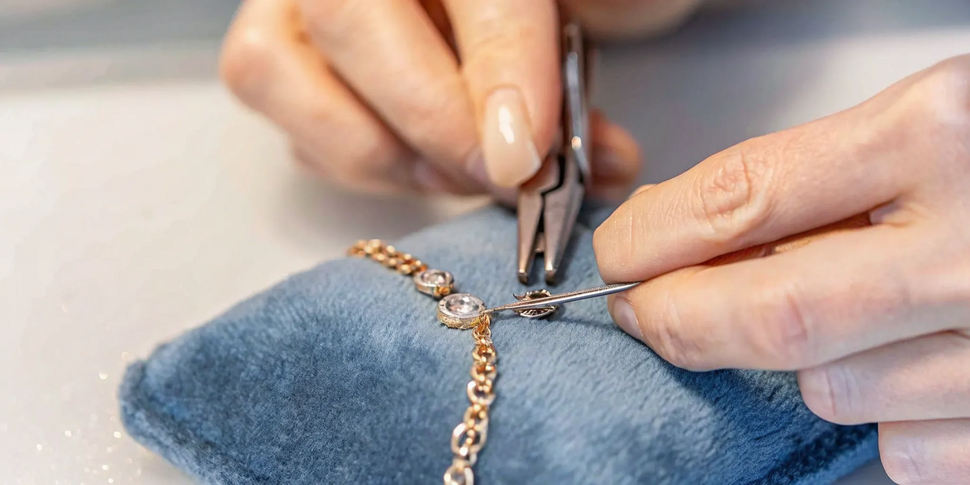
Take a look inside your jewelry box. Is there a beautiful bracelet you never wear because the clasp is broken? It’s a common story. A single faulty clasp can sideline a piece you truly love, whether it’s a delicate chain or a statement piece from a favorite designer. Instead of letting it collect dust, you can learn how to fix it. This guide demystifies the process of bracelet clasp repair, breaking it down into simple, actionable steps. We’ll help you figure out exactly what’s wrong and show you how to perform the fix, so you can rescue those forgotten treasures and enjoy wearing them again.
Key Takeaways
- Diagnose the Problem First: Before reaching for any tools, carefully inspect the clasp. Identifying whether the issue is a simple open jump ring, a bent part, or a broken internal spring will determine if you have a quick DIY fix or need a professional.
- Master the Simple Fixes at Home: Many common bracelet issues, like a bent lobster claw or a separated jump ring, can be repaired in minutes with a pair of needle-nose pliers. Learning these basic skills will keep your most-worn pieces in rotation.
- Trust a Professional with Precious Pieces: For high-value heirlooms, intricate designer clasps, or damage requiring specialized work, always consult an expert. A professional repair protects your jewelry's integrity, value, and sentimental worth.
Get to Know Your Bracelet Clasp: Common Types
Before you can even think about a repair, you need to know what you’re working with. Think of it like learning the names of the players on your favorite team—it just makes everything easier. Bracelet clasps come in all shapes and sizes, and different designers choose specific types for both security and style. Some are meant to be hidden and purely functional, while others are a core part of the bracelet's design.
Getting familiar with the most common types is the first step toward a successful fix. Once you can identify your clasp, you’ll have a much better idea of how it’s supposed to work and what might have gone wrong. Let’s walk through the five types you’re most likely to find on your favorite jewelry.
Lobster Claw Clasps
You’ve definitely seen this one before. The lobster claw is one of the most popular and secure clasps out there, and for good reason. Named for its resemblance to a lobster’s claw, it features a tiny, spring-loaded lever that you pull back to open the clasp. Once you release the lever, it snaps shut, securely holding onto a ring on the other end of the bracelet. Its sturdiness makes it a go-to for pieces you wear every day. While they are incredibly reliable, the internal spring can wear out over time, which is a common reason for repair.
Spring Ring Clasps
A close cousin to the lobster claw, the spring ring clasp is another classic you’ll find on many bracelets, especially more delicate chains. This clasp is a small metal ring with a spring mechanism inside. You pull back on a tiny lever, which opens a gap in the ring, allowing you to hook it onto the other end. Releasing the lever closes the gap. While they are a traditional type of clasp, the small size of the lever can sometimes make them a bit tricky to handle, especially if you’re putting on a bracelet by yourself.
Toggle Clasps
A toggle clasp is a two-piece closure that’s as much about style as it is about function. It consists of a T-shaped bar on one end and a large, open ring on the other. To secure it, you simply slide the bar through the ring. The tension of the bracelet holds the bar in place against the ring, making it surprisingly secure. Designers often incorporate toggle clasps as a beautiful focal point of a piece. They are incredibly easy to use and are a popular choice for chunkier bracelets where a delicate clasp might look out of place.
Magnetic Clasps
If you’ve ever struggled with a tiny clasp, the magnetic clasp is a dream come true. It’s exactly what it sounds like: two ends of a bracelet, each with a small, powerful magnet, that snap together to close. Their biggest advantage is convenience, making them a fantastic option for anyone who has difficulty with more traditional clasps. However, they might not be the best choice for very heavy bracelets or for pieces you wear during strenuous activity, as a hard knock could potentially pull the magnets apart.
Box Clasps
Often found on more intricate chain bracelets and elegant vintage & estate pieces, the box clasp is a sophisticated and secure option. It features a tab on one end that you press down to slide into a box-like opening on the other end, where it clicks into place. Many box clasps also have an extra safety latch that folds over the side for added security. They are designed to blend seamlessly into the bracelet, creating a continuous, polished look that doesn’t interrupt the design.
Why Do Bracelet Clasps Break?
It’s a sinking feeling: you look down at your wrist and realize your favorite bracelet is gone, or you feel it slip off because the clasp gave way. Clasps are the hardest-working part of any piece of jewelry. They endure constant opening, closing, and the daily tension of wear. Because they have moving parts and are often delicate, they are usually the first component to fail. Understanding why a clasp breaks is the first step toward a successful repair. Most issues fall into a few common categories, from the internal mechanics giving out to simple wear and tear. Whether it’s a modern piece from one of our incredible designers or a treasured family heirloom, knowing the cause helps you find the right solution to get it back on your wrist.
Spring Mechanism Failure
Many common clasps, like the familiar lobster claw or spring ring, rely on a tiny internal spring to function. This spring is what creates the tension that allows the clasp to open and then snap securely shut. Over time and with repeated use, this minuscule mechanism can simply wear out. It might lose its "springiness," becoming too weak to close the clasp arm completely, or it could break altogether. When this happens, the clasp may feel loose, get stuck in the open position, or fail to lock, putting your bracelet at risk of falling off. This is a very common issue, and once the internal spring is broken, the entire clasp usually needs to be replaced.
Everyday Wear and Metal Fatigue
Just like us, the metal in our jewelry can get tired. This process, known as metal fatigue, happens from repeated stress over a long period. Every time you open and close your clasp, you're putting a tiny amount of strain on the metal. Add in the general pulling and movement that comes with wearing a bracelet, and the metal can gradually lose its original shape and strength. This is especially true for parts that need to flex, like the tongue of a box clasp, which can lose its ability to click securely into place. This slow weakening is a natural part of a beloved bracelet's life story, but it eventually leads to a clasp that no longer functions reliably.
Bent or Damaged Parts
Accidents happen. A bracelet can easily get snagged on a sweater, caught on a doorknob, or tugged a little too hard. This sudden, sharp force can bend parts of the clasp out of alignment. Lobster claw clasps are particularly prone to being pulled open this way. Sometimes, a slight bend can be gently corrected with the right tools. However, if a piece is severely bent or a crucial part has snapped off, the damage might be more serious. Trying to force a bent piece back into shape without proper technique can sometimes weaken the metal further or cause it to break completely, turning a small problem into a bigger one.
Broken Jump Rings
Often, the problem isn't the clasp itself but the small metal ring that connects it to the chain—the jump ring. These little circles are the unsung heroes of your jewelry. In many cases, they are intentionally designed to be a point of failure. If your bracelet gets caught on something, the jump ring will pull open, saving the more expensive chain or the clasp from breaking. A broken or opened jump ring is one of the most frequent reasons a bracelet falls off, and thankfully, it's also one of the simplest fixes. Learning how to properly close or replace a jump ring is a great entry-level skill for any jewelry owner.
Your DIY Repair Toolkit: What You'll Need
Before you dive into any repair, gathering the right tools is the most important first step. Just like a chef needs the right knives, you need a few specific items to fix your bracelet without causing more damage. Trying to use household pliers or working in a dim corner will only lead to frustration and a potentially scratched piece of jewelry. Setting up a proper toolkit and workspace is simple, and it makes the entire process smoother and more successful. Think of it as creating your own little jewelry repair station. With the right setup, you’ll feel more confident tackling the fix and protecting the beautiful piece you’re trying to save.
Essential Jewelry Pliers
To work with the delicate components of a bracelet, you’ll need a pair of snipe-nose (or needle-nose) pliers. These aren’t the clunky pliers from your garage toolbox; they’re designed for precision. Their slender tips allow you to gently grip and open the tiny metal loops, called jump rings, that connect your clasp to the chain. Using the wrong tool can easily scratch the metal or warp the ring, so investing in a proper pair of jewelry pliers is key. They give you the control needed to perform a clean, professional-looking repair on even the most intricate pieces.
Jump Rings and Replacement Clasps
Jump rings are the unsung heroes of the jewelry world. These small metal circles are essential connectors, and a broken or warped one is often the culprit behind a failed clasp. It’s a great idea to have a small assortment of jump rings in different sizes and metals on hand for quick fixes. Sometimes, the problem isn’t the jump ring but the clasp itself. If the internal spring is broken or the mechanism is bent beyond repair, you’ll need a full replacement. You can find both jump rings and new clasps at most craft stores or online, allowing you to match the style of your original designer piece.
A Clean, Well-Lit Workspace
Don’t underestimate the power of a good workspace. Find a spot with plenty of light, like a desk near a window or under a bright lamp, so you can clearly see what you’re doing. Lay down a soft cloth or a jewelry mat to protect both your bracelet and your table surface. This also prevents tiny parts, like jump rings, from bouncing away and getting lost. Keeping your tools organized and within reach will make the repair feel less like a chore and more like a satisfying project. If you’re working on a particularly valuable or sentimental piece, like a vintage treasure, and feel hesitant, it's always best to book an appointment with a professional.
How to Figure Out What's Wrong with Your Clasp
Before you can fix your bracelet, you need to play detective and figure out exactly what went wrong. Most of the time, the problem is less dramatic than you think and surprisingly easy to identify. Taking a moment to carefully inspect the clasp will tell you everything you need to know about whether you have a quick DIY fix on your hands or if it’s time to call in a professional. So, grab your bracelet, find a spot with good lighting, and let’s get to the bottom of it.
Assess the Damage
Start with a simple visual inspection. Look closely at every part of the clasp and the rings connecting it to the chain. Is anything obviously bent, misshapen, or disconnected? Often, a lobster clasp gets caught on something and the little "claw" part is simply bent open. Another common culprit is the jump ring—the small circle of metal that attaches the clasp to the bracelet—which can get pulled open. If you’re looking at a piece of your favorite jewelry, take note of any visible gaps or parts that aren't sitting flush. This initial check often reveals a straightforward problem that you can likely handle yourself.
Test the Clasp's Function
Next, gently work the clasp’s mechanism. If you have a lobster or spring ring clasp, does the lever or trigger move smoothly? Does it spring back into place when you let go? If the movement feels stiff, gritty, or there’s no springiness at all, the internal mechanism might be damaged or broken. For toggle or box clasps, check if the parts still fit together securely. A loose fit could mean a part has been bent or worn down over time. This step helps you understand if the problem is structural (like a bent piece) or mechanical (like a broken spring), which is key to deciding your next move.
Decide: Can You Repair It or Do You Need to Replace It?
Now it’s time to make a judgment call. If your assessment revealed a slightly bent component or an open jump ring, and the clasp’s mechanism still works, you’re likely looking at a simple repair you can do at home. However, if the internal spring is broken, a piece has snapped off, or the metal is cracked, the clasp will probably need to be replaced entirely. For intricate clasps on designer pieces or cherished vintage & estate jewelry, it’s always best to err on the side of caution. If you feel even slightly unsure, it's wise to book an appointment with a professional jeweler who can ensure a seamless and secure repair.
How to Fix Common Clasp Problems
It’s that sinking feeling—you go to put on your favorite bracelet and the clasp just won’t cooperate. The good news is that many common clasp issues are surprisingly simple to fix at home. With a few basic tools and a steady hand, you can often get your beloved piece back in rotation without a trip to the jeweler. Let’s walk through some of the most frequent problems and how you can tackle them yourself.
Fix a Bent Lobster Claw Clasp
A bent lobster claw is one of the most common culprits behind a non-functioning clasp, especially on more delicate jewelry. If the little lever still has its spring and moves back and forth, you’re likely in luck. The metal has probably just been bent out of shape from getting caught on something.
To fix it, grab a pair of small needle-nose or chain-nose pliers. Gently grip the bent part of the clasp and carefully nudge it back into its original position. The key here is to use minimal force; you want to persuade the metal, not force it, which could cause it to snap. Once it looks right, test the clasp a few times to make sure it opens smoothly and closes securely.
Reattach Loose Parts with Jump Rings
If your clasp has detached from the bracelet chain, the problem is often a tiny, sneaky component called a jump ring. This is the small metal circle that connects the two parts. Over time, the split in the ring can work its way open, letting the chain or clasp slip free.
To fix this, you’ll need two pairs of pliers and a new jump ring if the original is lost or warped. Grip the jump ring on either side of the split. Instead of pulling the ring apart, which weakens the metal, gently twist the ends away from each other—one side toward you, one side away. Hook the end of your bracelet chain and the loop of your clasp onto the open ring. Then, simply twist the ends back together until they meet perfectly, ensuring there’s no gap.
Adjust Spring Tension
Does your box clasp feel loose or fail to make that satisfying "click" when you close it? This usually means the tension is off. This type of clasp, often found on beautiful vintage and estate pieces, has a "tongue" that slides into a box and locks into place. Over time, that tongue can get flattened, losing its spring.
To fix this, look closely at the tongue (the male end of the clasp). You should see a small, raised tab. Using your needle-nosed pliers, very gently lift this tab just a fraction of a millimeter. Test the clasp. If it’s still loose, lift the tab a tiny bit more. Repeat this process with small adjustments until it clicks securely into place. Be careful not to overdo it, as the tab can break if bent too far.
Straighten Bent Components
Sometimes the issue isn't with the tongue of a box clasp, but with the box itself. If it gets squeezed or bent out of shape, the tongue won't fit inside properly. This can happen if the bracelet gets accidentally crushed or stepped on. If adjusting the tongue’s tension tab didn't solve the problem, this is the next thing to check.
Take your pliers and gently squeeze the sides of the box part of the clasp. The goal is to return it to its original square or rectangular shape so the tongue can slide in smoothly and securely. Test the fit after each small adjustment. If you find that the internal mechanism is broken or the metal is cracked, it’s time to stop. This kind of damage requires a professional touch, so it’s best to book an appointment to have a jeweler take a look.
How to Replace a Broken Clasp
If you’ve determined that your clasp is beyond a simple fix, replacing it entirely is your next step. This might sound a little daunting, but it’s often a very manageable repair that can bring your favorite piece back into rotation. Think of it as a mini-makeover for your bracelet. With a little patience and the right tools, you can swap out that broken clasp for a new one and have your jewelry ready to wear in no time. Let’s walk through the process together.
Step 1: Remove the Old Clasp
First things first, you need to carefully detach the broken clasp. Look for the small metal circle that connects the clasp to the end of your bracelet—this is called a jump ring. Using your snipe nose pliers, gently grip one side of the jump ring and open it by twisting it sideways, not by pulling it apart. This motion preserves the ring's circular shape, making it easier to close later. Once there’s a small opening, you can slide the old clasp off the ring and set it aside. Be gentle throughout this process, especially if you’re working with a delicate chain.
Step 2: Choose the Right Replacement
Now for the fun part: picking a new clasp. You’ll want to choose a replacement that not only functions well but also complements the style of your bracelet. Consider the original design—was it a sleek piece from one of our contemporary designers, or a classic chain? Common options include lobster clasps, which are secure and easy to use, or spring rings for more delicate pieces. Make sure the new clasp is made from a matching metal and is the right size for your bracelet. A clasp that’s too heavy can weigh down a fine chain, while one that’s too small can be difficult to operate.
Step 3: Securely Attach the New Clasp
With your new clasp selected, it’s time to attach it. Slide the loop of the new clasp onto the open jump ring. Next, reattach the jump ring to the end link of the bracelet chain. To close it securely, grip each side of the jump ring’s opening with a separate pair of pliers. Gently twist the ends back toward each other until they meet perfectly, with no gap. A secure closure is key to ensuring your beautiful bracelet stays safely on your wrist. Run your finger over the seam to make sure it’s smooth and won’t snag on your clothes.
When to Call a Professional Jeweler
I love a good DIY project as much as anyone, but when it comes to fine jewelry, sometimes you have to know when to tag in an expert. While fixing a simple jump ring can be a satisfying five-minute task, more complex issues require a professional touch. Trying to fix something beyond your skill level can accidentally cause more damage, turning a small problem into a much bigger (and more expensive) one. A professional jeweler has the right tools, years of experience, and a steady hand to get the job done right. They can assess the damage accurately, source the perfect matching parts, and perform delicate work like soldering without compromising the integrity of your piece.
Think of it as an investment in your jewelry's longevity. A professional repair isn't just about fixing what's broken; it's about preserving the piece's value, story, and craftsmanship. They can spot underlying issues you might miss, like metal fatigue in an adjacent link or a weakening spring that's about to give out. Bringing your bracelet to a pro ensures it will be secure, beautiful, and ready for many more years of wear. It’s about peace of mind, knowing your treasured item is in the best possible hands.
For High-Value and Vintage Jewelry
If your bracelet is a family heirloom or a piece of high-value vintage and estate jewelry, it’s always best to consult a professional. These pieces often have unique construction, delicate materials, or sentimental value that makes a DIY repair too risky. Even a seemingly minor issue, like a broken clasp, can affect the overall integrity and value of the piece if not handled with care. A professional jeweler will know how to work with older metals and gemstones, ensuring the repair is both durable and historically appropriate. They can often fix a clasp in minutes, preserving the piece for the next generation.
For Complex Designer Mechanisms
Many contemporary designers use unique and intricate clasps that are as much a part of the design as the bracelet itself. These aren't your standard lobster claws; they might have hidden springs, custom-molded parts, or complex internal mechanisms. If one of these clasps breaks, it’s not a simple swap. Often, the entire mechanism needs to be replaced by someone with specialized knowledge of that particular design. Attempting to fix it yourself could damage the delicate parts and compromise the bracelet's aesthetic. A professional jeweler can source the correct components or even fabricate a new part to restore its original function and beauty.
For Damage Beyond a Simple Fix
Trust your intuition. If you look at the broken clasp and your first thought is, "I have no idea where to even start," that's your sign to step away from the pliers. Damage like a completely crushed clasp, a broken internal spring mechanism, or issues that require soldering are best left to the experts. If you don't feel comfortable with the repair, don't force it. A professional can prevent further damage and ensure your jewelry is repaired correctly and securely. It’s always better to be safe than sorry, especially with a piece you love. You can always book an appointment with us to have an expert take a look.
How to Care for Your Repaired Bracelet
Once your bracelet is back in one piece, a little preventative care can make all the difference in keeping it secure for years to come. Taking a few extra moments to handle and store your jewelry properly will help you avoid future trips to the repair bench. Think of it as protecting the pieces you love. After all, your beautiful jewelry deserves it. By building a few simple habits, you can ensure your repaired bracelet remains a favorite accessory, ready to wear whenever you are.
Test Your Repair
Before you wear your newly fixed bracelet out, give your handiwork a gentle test run. Open and close the clasp several times to make sure it moves smoothly and clicks securely into place. It’s important to check that the spring mechanism is still functional and provides the right amount of tension. If the clasp feels loose or doesn't snap shut with confidence, it might need another look. Give the bracelet a light tug to confirm it holds firm. If anything feels off, it's always better to be safe than sorry. You can always book an appointment with us to have a professional take a look.
Tips for Preventing Future Breaks
The best way to prevent another broken clasp is to catch potential problems early. Get into the habit of giving your most-worn bracelets a quick inspection every few weeks. Look for any signs of wear, bending, or gaps in the jump rings. Addressing a minor issue, like a slightly bent clasp, is much simpler than dealing with a major break later on. It’s also smart to be mindful of when you wear your more delicate pieces. Consider taking them off before activities like gardening, working out, or swimming to avoid accidental snags and unnecessary stress on the clasp and chain.
Proper Handling and Storage
How you handle and store your bracelet plays a huge role in its longevity. When fastening or unfastening the clasp, use gentle and even pressure. Forcing a stiff clasp can cause unnecessary strain. When you’re not wearing your bracelet, store it in a way that prevents tangling and pressure on the clasp. A fabric-lined jewelry box with separate compartments or a soft pouch is ideal. This is especially important for delicate items, like pieces from a Vintage & Estate collection, which require a little extra TLC. Proper storage keeps your jewelry safe, organized, and ready for its next outing.
Related Articles
- Your Guide to Jewelry Repair Service in Denver - Element 79 Contemporary Jewelry
- E79 Blog - Your Guide to the Best Jewelry Repair in Denver - Element 79 Contemporary Jewelry
- Jewelry Repair Service 101: A Complete Guide - Element 79 Contemporary Jewelry
Frequently Asked Questions
My clasp isn't broken, but it's really difficult for me to put on by myself. Can I replace it with something easier? Absolutely. Swapping a tricky clasp for one that works better for you is a great way to get more wear out of a piece you love. Magnetic clasps are a fantastic choice for convenience, as they practically fasten themselves. For bracelets with a bit more weight, a stylish toggle clasp can also be much easier to handle than a tiny spring ring. The replacement process is the same—just be sure to choose a new clasp that matches the metal and complements the overall style of your bracelet.
I'm worried I'll scratch my bracelet trying to fix it. Any tips to avoid that? This is a very common concern, and you're smart to think about it. The two most important things you can do are using the right tools and setting up a proper workspace. Make sure you're using pliers designed specifically for jewelry making; their tips are smaller and smoother than household pliers, which can easily mar the metal. Also, always work on a soft, clean surface, like a folded cloth or a jeweler's mat. This protects your piece from scratches and stops any tiny parts from bouncing away if you drop them.
How do I know if I should fix my clasp or just replace the whole thing? A good rule of thumb is to look at whether the issue is structural or mechanical. If a part is simply bent out of shape or the connecting jump ring has been pulled open, you can often gently nudge it back into place for a successful repair. However, if the internal spring mechanism has failed—meaning the lever feels limp and has no "spring" left—or if a piece of the metal has physically snapped off, it's time for a full replacement.
The clasp itself seems fine, but my bracelet keeps falling off. What's the most likely problem? More often than not, the culprit isn't the clasp but the small connector ring that attaches it to the chain, known as a jump ring. Take a close look at that little circle of metal. You'll likely find a small gap where the ring has been pulled open, allowing the chain to slip out. This is a very common issue and thankfully one of the easiest to fix by simply closing the gap with a pair of pliers.
Is it worth repairing a clasp on a less expensive, non-fine jewelry piece? I think so. Fixing a clasp on any piece of jewelry, regardless of its monetary value, is a great skill to have. Think of a less precious item as the perfect piece to practice on. Successfully fixing it will give you the confidence to handle a simple repair on a more sentimental or valuable bracelet down the road. Plus, if you love the piece and want to keep wearing it, it's always worth the few minutes it takes to make it functional again.
Recent articles
View all
Brooke's Holiday Favorites - 2025

Holly's Holiday Favorites - 2025