

A Simple Guide to the Diamond Clarity Chart
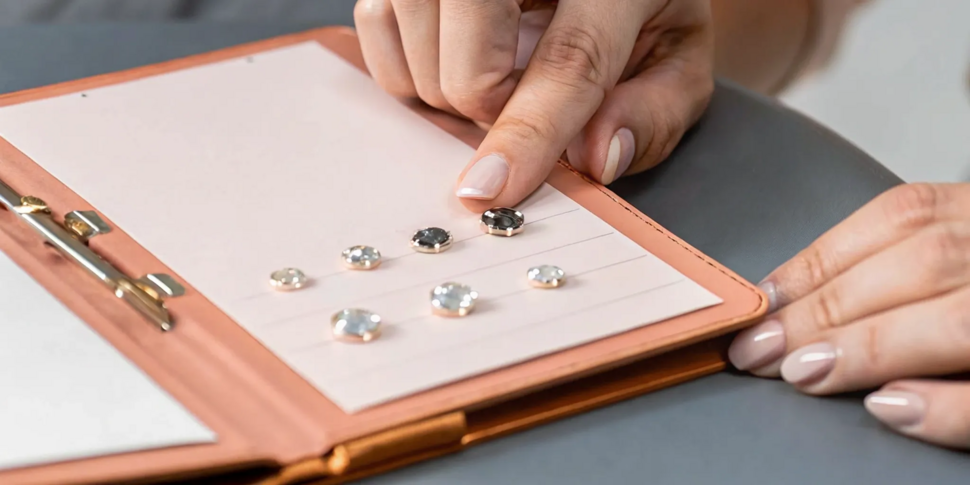
A diamond is so much more than a letter grade on a piece of paper. While the GIA diamond clarity chart provides an essential framework for quality, the real magic happens when you see how a stone performs in the light. Clarity is all about a diamond's internal and surface characteristics, but many of these are completely invisible without a jeweler's loupe. This is where you can be a truly savvy shopper. We’ll teach you how to look beyond the grade to find a visually stunning diamond, focusing on what really matters: its sparkle, its life, and how it makes you feel.
Key Takeaways
- Prioritize an "eye-clean" appearance over a flawless grade: This is the secret to getting the best value. Diamonds in the VS and SI ranges often look perfect to the naked eye, allowing you to get a gorgeous stone without paying a premium for microscopic perfection you can't see.
- Match the clarity grade to the diamond's shape: Brilliant-cut shapes like rounds and ovals are masters at hiding inclusions with their sparkle, making lower clarity grades a smart choice. Step-cuts like emeralds have a clearer, window-like appearance and look their best with higher clarity grades.
- Use the grading report to understand your diamond's character: Think of inclusions as unique fingerprints rather than flaws. The report's plot map shows you exactly where these natural characteristics are, helping you appreciate the one-of-a-kind story of your specific stone.
What is Diamond Clarity, and Why Should You Care?
When you start looking at diamonds, you'll hear a lot about the "4Cs," and clarity is a big one. So, what is it? Simply put, diamond clarity is a measure of a diamond's purity, determined by the number, size, and location of its natural imperfections. Think of these imperfections as tiny birthmarks that formed deep within the Earth as the diamond was growing. Nearly every diamond has them, and they make each stone completely unique, telling a story of its incredible journey to you.
Understanding clarity is key because it directly impacts a diamond's beauty and price, and it's where you can be really strategic with your budget. It helps you decide what's most important to you. Are you aiming for a stone that appears flawless to the naked eye, or are you comfortable with a few unique characteristics that allow you to get a larger diamond? There's no right or wrong answer. Learning about clarity gives you the confidence to choose a piece of jewelry that you'll love for its individual character and sparkle. It’s less about finding a "perfect" diamond and more about finding the perfect diamond for you. Knowing the basics empowers you to ask the right questions and feel great about the beautiful stone you ultimately select.
Let's Talk Inclusions and Blemishes
The "birthmarks" we mentioned fall into two categories: inclusions and blemishes. Inclusions are tiny imperfections located inside the diamond. These can be things like microscopic crystals, cloudy spots, or delicate lines called feathers. Blemishes, on the other hand, are found on the diamond's surface and might include small scratches or pits from the polishing process.
To keep things consistent, gemologists grade diamond clarity under 10x magnification. This means many of the inclusions that determine a diamond's grade are completely invisible without a jeweler's loupe. These internal characteristics are like a diamond's fingerprint, a one-of-a-kind map that tells the story of its formation.
How Clarity Affects a Diamond's Sparkle and Price
Clarity has a direct relationship with a diamond's ability to sparkle. A diamond with fewer and smaller inclusions allows more light to pass through it without obstruction, resulting in that brilliant fire and flash we all love. The fewer imperfections a diamond has, the rarer it is, which naturally makes it more expensive.
This is where you can make a strategic choice for your engagement ring or other fine jewelry. A diamond with a very high clarity grade will be stunning but will also come with a premium price tag. Many people find the sweet spot in grades where inclusions are not visible to the naked eye. This allows you to find a beautiful, sparkling diamond that fits your budget without compromising on what you can actually see.
Decoding the GIA Diamond Clarity Chart
When you start looking at diamonds, you'll quickly come across the GIA Diamond Clarity Chart. Think of it as the universal language for describing a diamond's internal and external characteristics. It’s the industry standard, created by the Gemological Institute of America, and understanding it is your first step toward choosing a stone with confidence. The scale ranges from the very rare Flawless (FL) down to Included (I3), giving every diamond a specific grade based on the size, nature, and location of its unique features. Let's walk through each category so you know exactly what you're looking at when you find a piece that speaks to you.
Flawless (FL) & Internally Flawless (IF)
At the very top of the chart are Flawless (FL) and Internally Flawless (IF) diamonds. A Flawless diamond is the absolute pinnacle of purity; it has zero inclusions or blemishes visible even to a skilled grader under 10x magnification. They are exceptionally rare, making them the most prized and expensive diamonds on the market. Right next door are Internally Flawless diamonds. These stones have no internal inclusions but might have tiny surface blemishes that a gemologist can see under magnification. To the naked eye, they appear identical to Flawless stones and represent the ultimate in diamond quality.
Very, Very Slightly Included (VVS1 & VVS2)
Next up are the Very, Very Slightly Included grades, VVS1 and VVS2. As the name suggests, these diamonds have minuscule inclusions that are extremely difficult for even a trained professional to see under 10x magnification. The difference between VVS1 and VVS2 often comes down to the location of these tiny spots, with VVS1 being the cleaner of the two. For anyone seeking a high-quality diamond with imperfections that are essentially invisible, the VVS category is a fantastic choice. These stones offer a near-perfect appearance without the premium price of a Flawless diamond, making them a popular pick for stunning engagement rings.
Very Slightly Included (VS1 & VS2)
The Very Slightly Included (VS1 and VS2) category is often considered the sweet spot for balancing beauty and value. These diamonds have minor inclusions that are visible under 10x magnification but are typically not noticeable to the naked eye. This is where the term "eye-clean" really comes into play. A VS1 diamond will almost always be eye-clean, while a VS2 diamond usually is, too. These diamonds offer excellent value because you get a stone that looks clean and brilliant without paying for the microscopic perfection of higher grades. It's a smart, beautiful choice for any piece of fine jewelry.
Slightly Included (SI1 & SI2)
Moving into the Slightly Included (SI1 and SI2) grades, you'll find diamonds with inclusions that are noticeable under 10x magnification. For an SI1 diamond, the inclusions are often still not visible to the unaided eye, making many of them great eye-clean options. With SI2 diamonds, the inclusions may be visible without magnification. However, that doesn't mean you should rule them out. An SI diamond can be a fantastic, budget-friendly choice, especially if the inclusion is off to the side or is a light color that blends in. It’s all about finding a stone where the inclusions don't detract from its overall beauty.
Included (I1, I2, & I3)
Finally, we have the Included category, which covers I1, I2, and I3 grades. Diamonds in this range have obvious inclusions that are almost always visible to the naked eye. These characteristics can sometimes affect the diamond's transparency and brilliance, meaning they might not sparkle as intensely as stones with higher clarity grades. While these diamonds are the most affordable, their visible flaws can impact their durability and appearance. At Element 79, we typically steer clear of these for center stones, but it's helpful to know where they fall on the official diamond clarity scale.
What Does "Eye-Clean" Really Mean?
You’ll hear the term “eye-clean” a lot when you’re looking at diamonds, and it’s one of the most helpful concepts to understand. Simply put, an eye-clean diamond has inclusions that are so small you can’t see them without magnification. To the naked eye, it looks just as perfect as a flawless diamond. Think of it as the secret to getting a stunning stone without the sky-high price tag of a technically perfect one. This is where you can find incredible value and make your budget work harder for you.
Most eye-clean diamonds fall within the VS (Very Slightly Included) and SI (Slightly Included) ranges on the GIA clarity scale. These diamonds are the sweet spot for many buyers because you’re not paying for a level of perfection that’s invisible in everyday life. Instead, you get a diamond that’s beautiful where it counts: in its sparkle and overall appearance. When you’re browsing for jewelry, focusing on eye-clean options allows you to prioritize other factors, like getting a better cut or a larger carat size, which make a much bigger visual impact. It’s about being a smart shopper and finding a diamond that’s perfect for you, not just perfect on paper.
How to Spot an Eye-Clean Diamond
Finding an eye-clean diamond is less about technical specs and more about what you can see. The best place to start your search is with diamonds in the VS2 and SI1 clarity grades, as they often provide that perfect look without the premium cost. The most important step is to look at the diamond yourself, away from a jeweler’s loupe. Does it look clear and brilliant to you? If you can’t see any distracting spots with your own eyes, you’ve likely found an eye-clean stone. The best way to feel confident is to see it in person, which is why we always invite you to book an appointment and see our collection up close.
Why "Eye-Clean" Can Be Better Than "Flawless"
Choosing an eye-clean diamond over a flawless one is often a savvy move. Since the visual difference is nonexistent to the naked eye, you can free up your budget for things that have a much bigger impact on the ring’s overall look. Most people would rather have a slightly larger, eye-clean diamond than a smaller, flawless one. You could also put that money toward a gorgeous, handcrafted setting from one of our amazing designers. It’s also worth noting that inclusions are more visible in larger diamonds, so while a 1-carat VS2 might look perfect, a 3-carat VS2 might show some tiny marks. It’s all about finding the right balance for the specific stone you love.
How Diamond Shape Affects Clarity
Did you know that the shape of a diamond can make a huge difference in how its clarity is perceived? It’s one of the most interesting parts of choosing a stone. Some shapes are brilliant masters of disguise, hiding tiny imperfections with their sparkle, while others act like a crystal-clear window, putting everything on display. This doesn't mean one shape is better than another; it just means you can be strategic when matching your desired shape with the right clarity grade.
Understanding this relationship is key to finding a diamond you’ll love. It allows you to prioritize what matters most to you, whether that’s a flawless appearance in a step-cut diamond or maximizing sparkle in a brilliant cut. For example, if you fall in love with a brilliant round cut, you can feel confident considering a slightly lower clarity grade because the sparkle will work in your favor. Conversely, if you’re drawn to the clean, geometric lines of an emerald cut, you’ll know to focus your budget on a higher clarity stone. As you explore different jewelry styles, keeping this in mind will help you find a truly stunning diamond that fits your budget and style perfectly.
The Best Shapes for Hiding Inclusions
If you love sparkle, you’re in luck. Diamond shapes with a brilliant cut, like the classic round, oval, cushion, and pear, are fantastic at hiding inclusions. These cuts are designed with dozens of tiny facets that act like a hall of mirrors, reflecting light in every direction. All that dazzling fire and brilliance makes it much harder for the naked eye to spot small imperfections within the stone. Because of this, you can often find a beautiful, eye-clean diamond in a VS2 or even an SI1 clarity grade. This is a great way to get more for your money without sacrificing the look of your bridal ring.
Shapes That Demand a Higher Clarity Grade
On the other end of the spectrum are step-cut diamonds, like the elegant emerald and Asscher cuts. These shapes are known for their long, clean lines and large, open table (the flat top facet). This creates a sophisticated, hall-of-mirrors effect, but it also means there’s nowhere for inclusions to hide. Any blemish inside the diamond will be much more noticeable. For these stunning cuts, you’ll want to aim for a higher clarity grade, typically in the VVS1 or VVS2 range, to ensure the diamond is eye-clean. Many of our featured designers create breathtaking pieces with these shapes, celebrating their unique and pristine beauty.
Which Clarity Grade Gives You the Best Value?
This is where we get practical. You want a diamond that looks incredible to the naked eye without paying for a level of perfection that you can’t see. It’s all about finding that perfect balance between beauty and budget, which allows you to focus on the design you love or the carat size you’ve been dreaming of. Let’s find your diamond’s sweet spot.
How Clarity Grades Affect the Price Tag
The link between a diamond's clarity and its price is simple: the rarer something is, the more it costs. Since diamonds with fewer marks are much harder to find, they naturally come with a higher price tag. As you move down the clarity scale from Flawless to Included, the price generally drops. This is why so many stunning bridal pieces feature diamonds in the middle of the scale. It’s a smart way to get a gorgeous stone that fits your budget, freeing you up to prioritize other factors like cut or carat weight.
Find Your Clarity "Sweet Spot" for Your Ring
For most people, the sweet spot for value lands in the VS2 and SI1 clarity grades. Diamonds in this range are usually "eye-clean," which means you can't spot any inclusions just by looking at them. This allows you to get a visually perfect stone without paying the premium for a technically flawless one. A diamond with a lower clarity grade can still be absolutely beautiful, especially if it has an excellent cut that brings out its sparkle. The best way to find your perfect match is to see it in person, and we can help you compare your options when you book an appointment with us.
Busting Common Diamond Clarity Myths
When you start shopping for a diamond, it’s easy to get caught up in the technical details. Clarity is one of the famous "4Cs," but it's also one of the most misunderstood. A lot of myths float around, making people think they need to spend a fortune on a perfectly "clean" stone to get something beautiful. The truth is, a diamond's character is often found in its tiny imperfections. Let's clear up a couple of the most common misconceptions so you can shop with confidence and find a diamond that truly speaks to you.
Myth: You Need a Flawless Diamond
This is probably the biggest myth out there. While Flawless (FL) and Internally Flawless (IF) diamonds are at the top of the GIA scale, they are exceptionally rare and their price reflects that. For most of us, a diamond doesn't need to be technically flawless to be stunning. The goal is to find a diamond that is "eye-clean," meaning you can't see any inclusions without magnification. Many stones in the VS (Very Slightly Included) and even SI (Slightly Included) ranges look perfect to the naked eye. This allows you to get a gorgeous diamond for your bridal ring without paying for rarity you can't see.
Myth: All Inclusions Are a Bad Thing
It’s time to reframe how we think about inclusions. Instead of seeing them as flaws, think of them as a diamond's unique fingerprint. These tiny, natural characteristics make your stone completely one-of-a-kind and can even help you identify it. Many inclusions are so small they can only be seen under a microscope and, according to the Gemological Institute of America, don't impact the stone's sparkle at all. Choosing a diamond with these unique markers is a beautiful way to find a piece with soul, much like the work from our incredible designers. It’s about finding beauty, not just perfection.
How to Use the Clarity Chart When You Shop
Think of the diamond clarity chart as your trusted map when you’re shopping for a stone. It’s not about finding a diamond with zero flaws; it’s about understanding the unique character of the diamond you’re considering. The industry standard is the GIA clarity scale, which has 11 grades ranging from Flawless (FL) to Included (I3). It’s important to remember that these grades are always assigned by a trained gemologist looking at the diamond under 10x magnification. This means many of the inclusions that determine a grade aren’t even visible to the naked eye.
When you’re in the store, the best way to use this knowledge is to get hands-on. Ask to look at the diamond through a jeweler’s loupe (a small magnifying tool) so you can see what the experts see. It’s also a great idea to view the diamond in different lighting conditions, from bright spotlights to softer, more natural light. This will give you a real-world sense of its sparkle and how any inclusions might affect its appearance. This hands-on approach is especially important when choosing a piece you'll love forever, like a custom engagement ring.
Key Questions to Ask Your Jeweler
Walking into a jewelry store can feel overwhelming, but asking the right questions will help you feel confident in your choice. We love talking about the details, so don’t ever hesitate to get curious. Here are a few essential questions to start with:
- Can I see the diamond’s grading report? Always ask for the official report from a reputable lab like the GIA. This is your unbiased proof of the diamond’s quality and characteristics.
- Is this diamond considered “eye-clean”? This is a great way to ask if any inclusions are visible without magnification.
- Can you point out the main inclusions on the clarity plot and under the loupe? This helps you connect the diagram on the report to the actual stone you’re holding.
When you’re ready to explore your options, you can book an appointment with us to go over these questions and more in a relaxed, no-pressure setting.
How to Read a Diamond Grading Report
The diamond grading report is your stone’s official biography, and the clarity section is one of its most important chapters. The report will list a final clarity grade, like VS1 or SI2, which is determined by a gemologist who carefully considers the size, number, type, and location of the diamond’s inclusions.
One of the most helpful features on the report is the clarity plot. This is a diagram of the diamond that maps out its specific inclusions and blemishes. Think of it as a fingerprint. Typically, red symbols mark internal characteristics (inclusions), while green or black symbols mark external ones (blemishes). This plot shows you exactly where the features are located, which can help you understand why a diamond received its particular grade and whether its inclusions are noticeable.
Related Articles
- How to Tell If a Diamond Is Real: 10 Easy Tests
- Why Do Diamonds Sparkle? The Science of Shine
- The Ultimate Guide to Hearts and Arrows Diamonds
Frequently Asked Questions
Is a higher clarity grade always the better choice? Not at all. The best choice is a diamond that looks beautiful to you and fits your budget. Many people aim for an "eye-clean" diamond, which means its tiny imperfections are not visible without magnification. A stone in the VS or SI range can look identical to a Flawless one in person but will cost significantly less. This allows you to put more of your budget toward the diamond's cut, which has the biggest impact on sparkle, or its carat size.
Will an inclusion make my diamond more likely to break? For the vast majority of diamonds, the answer is no. The inclusions in higher-quality stones (from SI grades and up) are typically microscopic and do not affect the diamond's structural integrity. It's only when you get to the lower "Included" (I1, I2, I3) grades that you might find inclusions large enough to pose a risk to durability. We carefully select our diamonds to ensure they are both beautiful and strong enough for everyday wear.
What's the lowest clarity grade I should consider for an engagement ring? This really depends on the diamond's shape and your personal preference. For brilliant cuts like rounds or ovals, their intense sparkle can hide imperfections well, so you can often find a stunning eye-clean diamond in the SI1 or even SI2 range. For step cuts like emerald or Asscher shapes, which have a more open and transparent look, you'll likely want to stick to a VS2 grade or higher to ensure no inclusions are visible.
Why does a diamond need a grading report if I can just look at it? A grading report from a respected lab like the GIA is your objective, third-party verification of the diamond's qualities. While looking at a diamond is the most important step, the report gives you the full story. It confirms the clarity grade under controlled, professional conditions and provides a map of the diamond's unique inclusions. This ensures you know exactly what you are buying and gives you confidence in your investment.
Are inclusions and blemishes the same thing? They are similar but have one key difference: location. Inclusions are natural characteristics found inside the diamond, like tiny crystals or feathers that formed millions of years ago. Blemishes are surface-level imperfections, such as minor scratches or pits that can occur during the cutting and polishing process. Both are considered when a gemologist assigns a final clarity grade.
Recent articles
View all
Brooke's Holiday Favorites - 2025

Holly's Holiday Favorites - 2025